Loading…
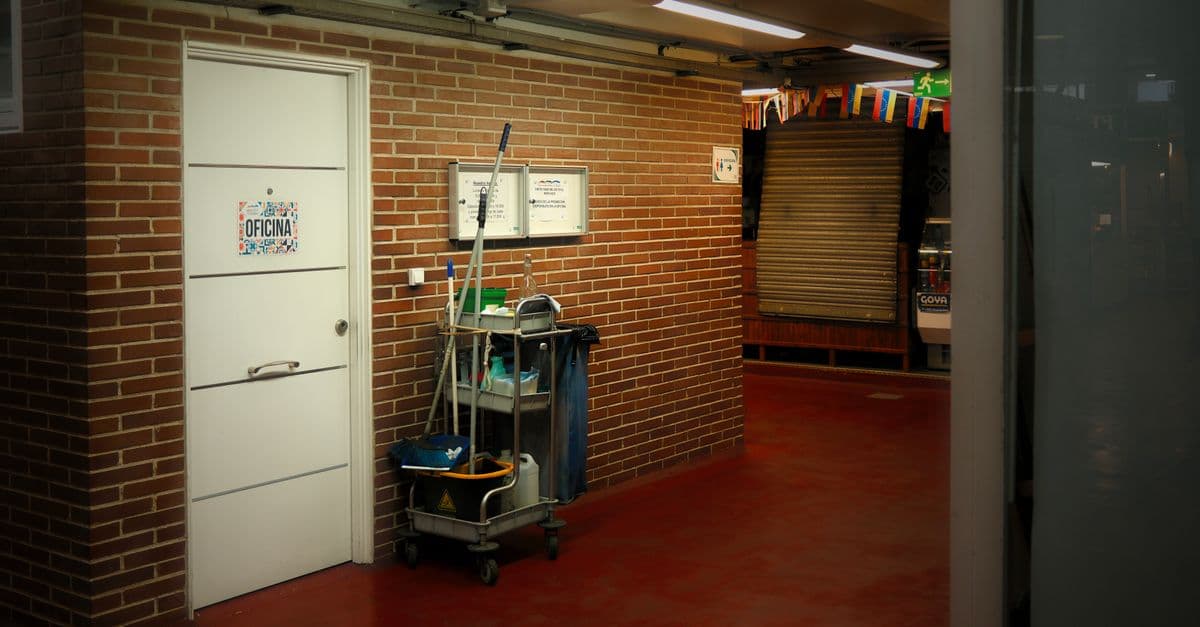
For cleaning and facilities companies
Thirty sites, forty cleaners, and one whiteboard.
Know a visit was missed before the client does, and stop rebuilding the rota every Sunday night.
Cleaning is a business of many small promises kept in many places at once, mostly out of hours and mostly unsupervised. The work itself is not complicated. Making sure it reliably happened, across thirty sites and forty people, with staff joining and leaving constantly, is where the whole difficulty sits.
The classic failure is not a bad clean. It is an absent one. Someone was ill, or left, or thought they had swapped with a colleague, and nobody knew until a client walked into a dirty office on a Monday morning. By then the damage is to the relationship, not the floor.
The other classic failure is administrative. Rotas rebuilt from scratch each week, wages calculated from texts and memory, invoices for sites that changed frequency months ago, and a new starter pack that gets assembled by hand every time somebody joins. All of it is repeatable work, which means most of it does not need a person doing it.
Sound familiar?
- Nobody knows a cleaner did not turn up until the client rings to say the office is dirty
- Rotas rebuilt every week in a spreadsheet, then sent out by text one person at a time
- Keys, alarm codes and access instructions kept in a folder and in people's heads
- High staff turnover, so the same induction paperwork is done again every few weeks
What we do about it
- Cleaners check in and out on their phones, so a missed visit is known within minutes rather than days
- Rotas built once and published to everyone at once, with swaps and cover handled in the same place
- Site information, access notes and equipment lists held securely against each site, visible only to who needs them
- Onboarding that collects documents, right to work checks and training records without a paper file
A day that probably looks like yours
Nothing here is a disaster. That is rather the point: this is an ordinary day, and the cost is spread so thinly that nobody ever adds it up.
- 05:45An early shift cleaner is ill and texts a supervisor who is asleep.The site is not covered, and nobody finds out until the client arrives.
- 08:30A client rings about last Thursday, which they say was missed.No record either way, so you take their word for it and credit the visit.
- 11:00New starter begins tomorrow. Documents, right to work check and training pack to assemble.Most of an afternoon of somebody's time, repeated every few weeks.
- 14:20A site changes from five nights a week to three.The rota is updated, the invoice is not, and you bill the old figure for four months.
- 17:00Keys for a site are with a cleaner who left last week.A lock change, an awkward call to the client and a real security worry.
- 20:45Next week's rota built in a spreadsheet and texted out person by person.Two hours every week, and at least one person who never got the message.
Knowing the visit happened, without standing there
The single most useful thing a cleaning company can add is proof of attendance, because it fixes two problems at once. It tells you about a missed visit while you can still do something about it, and it gives you an honest record when a client believes a visit was missed and it was not.
In practice this is a check in and check out on the cleaner's own phone, ideally tied to the site so it cannot be done from a bus. It takes seconds and needs no training. What it produces is a live picture of the evening: who is on site, who is late, who has not appeared at all, so a supervisor can cover a gap at six in the morning rather than apologise at nine.
Used well, it also becomes a selling point. Being able to show a client exactly when their site was attended, every night, for the last three months, is a level of accountability most competitors cannot offer, and it changes the tone of contract renewals.
Rotas that are built once, not every week
Most cleaning rotas are fundamentally the same week after week, with a handful of changes for holidays, sickness and new sites. Rebuilding the whole thing every Sunday in a spreadsheet is therefore hours spent recreating something that already existed, and it is the point at which mistakes enter.
A proper rota is created once as a repeating pattern and then edited. Publishing it puts the same information in front of everyone at the same moment, on their phones, rather than in forty individual texts. Swaps and cover requests happen in the same place, so the version in the office and the version in a cleaner's head are finally the same version.
It feeds the boring parts too. Hours worked flow into payroll rather than being reconstructed from messages, and hours delivered can be checked against hours charged. For a business where wages are the overwhelming cost, that link being accurate matters more than almost anything else.
Keys, codes and site knowledge
Every cleaning company carries a quiet security responsibility that rarely appears in the contract discussion. You hold keys, alarm codes, fobs and access instructions for other people's premises, often after hours, often with staff who joined recently. Where that information lives, and who can see it, is a real question.
Keeping it in a shared folder that everyone can open, or in a group chat, is the common answer and the wrong one. Holding it against each site, with access limited to the people who actually work there and the supervisors who cover it, is not difficult to set up and materially reduces the risk. It also means that when somebody leaves, their access ends the same day rather than whenever somebody remembers.
The practical benefit is just as real. Site notes, equipment lists, where the cupboard is, which entrance to use, what the client is fussy about, all in one place, means a cover shift by someone who has never been there goes well instead of badly.
Turnover is a fact, so make joining and leaving fast
Cleaning has high staff turnover and no amount of software changes that. What software can change is how much of your week each arrival and departure consumes. If onboarding means assembling a pack by hand, chasing documents by text and typing details into three systems, then turnover is taxing the office continuously.
Moving that to a simple digital process, where a new starter uploads their own documents, works through the induction, and confirms they have read the site rules, cuts the admin down to checking rather than collecting. Records of right to work checks and training sit against the person instead of in a drawer, which is also where you want them if anyone ever asks.
Leaving matters just as much and gets far less attention. A short leaver routine that removes system access, records the return of keys and fobs, and closes off site information prevents the slow accumulation of former staff who can still get into things. That accumulation is one of the most common weaknesses we find in any business, and in cleaning it is physical as well as digital.
Real examples
Illustrative cases drawn from the kind of work we do. Tap one to see what happened and what could have been done. We do not name clients without their permission.
The missed visit nobody knew about
The case
An office cleaning contractor discovered a site had been missed three nights running only when the client emailed to cancel the contract. The cleaner had left without telling anyone, and because there was no attendance record, nothing flagged an absence for the best part of a week.
What could have been done
A check in on the cleaner's phone would have shown the first missed night at six the following morning, in time to send cover. The contract is lost to a reporting gap rather than to any failure of the actual cleaning.
The site that changed frequency and never changed price
The case
A client reduced their service from five nights to three. The rota was updated straight away because the operations team acted on it, but the invoice template was never touched, and the client was billed at the old rate for several months before their finance team spotted it and asked for a refund.
What could have been done
When the schedule and the billing come from the same record, changing the service changes the invoice by definition. It removes both the embarrassing overcharge and its far more common twin, the extra service that was delivered for months and never billed at all.
The keys that walked
The case
A cleaner left abruptly and kept a set of keys and an alarm code for a client's premises. Nobody was certain what they held because access details were kept in a shared spreadsheet and a group chat that had been running for years. The client had to be told, and locks had to be changed at the contractor's expense.
What could have been done
Holding site access details against the site, visible only to current staff assigned to it, with a short leaver routine covering both digital access and physical keys, turns a security incident into a routine handover. It also means you can answer the client's first question, which is simply what did they have.
What cleaning and facilities companies usually ask us for
Custom CRM and business systems
The system you actually need rather than the one you can rent. Built around your process, integrated with what you already use.
£20,000 to £40,000
Virtual administrator
A trained administrator working on your business remotely, backed by automation so they get through several times the work.
£1,000 to £2,000/month
Bookkeeping support
Receipts captured, transactions categorised and month end tidied, ready for your accountant rather than dumped on them.
£600 to £1,200/month
IT support and managed service
A named engineer who knows your setup, agreed response times in writing, and no ticket queue purgatory.
£55 to £150/user/month
Local SEO and Google Business
Get found by the people down the road who are ready to buy. We fix your Google Business Profile, get your Name, Address and Phone matching everywhere, and win the map pack that sits above the normal results.
£500 to £1,200/month
Common questions
Our cleaners are not confident with technology. Will they manage this?
The parts they touch have to be almost nothing, or it fails. In practice that means tapping once to start a shift and once to finish, in whatever language suits them, on a phone they already own. If a member of staff genuinely has no smartphone, there are simple alternatives at the site itself. We would design around the team you have.
Is checking in on a phone not just surveillance?
It is a fair question and worth handling openly. The purpose is to know a site was covered, not to watch individuals through the day, and it works best when staff are told exactly that and exactly what is recorded. Many cleaners actually prefer it, because it proves they were there when a client claims otherwise.
Can it handle staff who work across several sites in one shift?
Yes, and that is the normal pattern in this trade. Each site is checked in and out separately, so you get travel patterns and real time on site rather than a single block of hours. That is also what makes it possible to see which sites are quietly taking longer than they are priced for.
Will this connect to how we do payroll?
Usually yes. The point of capturing hours accurately is that they should only be entered once. Whether that is a direct connection or an export depends on what you run payroll on, and we would rather use a simple reliable export than an unreliable clever link.
We are growing fast and it is all held together by one supervisor. Where do we start?
With attendance, almost always. It is the cheapest thing to introduce, staff pick it up in a day, and it immediately reduces the number of surprises that reach the client. Rotas and onboarding come next, once the operational picture is honest. Doing it in that order also means the first thing you buy pays for itself before the second.
Not quite your trade?
Plumbers and heating engineersElectriciansSalons and barbersGarages and MOT centresAccountants and bookkeepersContact centres and sales teamsBuilders and construction firmsJoiners and carpentersLandscapers and grounds maintenanceDental practices and clinicsCafes, restaurants and takeawaysEstate and letting agentsCare homes and home care providers
Admin Rescue for cleaning and facilities companies
A job management system built around how you actually work. Missed calls text back automatically, quotes go out in minutes, and everything lands in your accounts software without you retyping it.
from £2,400 setup then £150/month